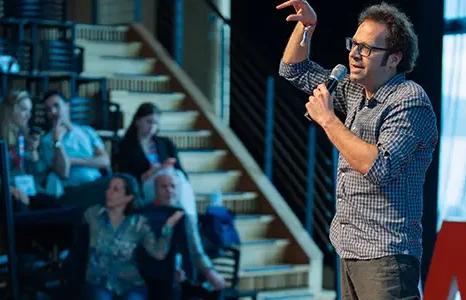
The E4Warning project participated in the GEO Global Forum 2025, held from May 5–9 at the Auditorium della Tecnica in Rome, joining over 60 Horizon Europe-funded projects in presenting cutting-edge Earth Observation (EO) solutions for sustainable development and global health security.
As part of the EU Booth, E4Warning presented its poster on EO-driven risk assessment for mosquito-borne diseases, highlighting how satellite data and environmental covariates are used to model the habitat suitability of key West Nile virus (WNV) vectors and avian reservoirs across Europe. Our contribution emphasized the importance of dynamic, seasonally resolved models to improve early warning systems for WNV and other vector-borne threats.
The event also marked the adoption of the GEO Post-2025 Strategy, reaffirming the role of EO in addressing climate adaptation, environmental resilience, and global health. Throughout the week, the EU Booth hosted a rich program of live talks, e-posters, expert meetups, and thematic sessions, making it a key hub for showcasing how EO can bridge science, policy, and impact.
In December 2024, Elisa Mora and Alex Richter-Boix (CEAB-CSIC), members of the E4Warning consortium, participated as invited speakers at the EMCA workshop“Dialogue with Wings: Communicating Mosquito Science Effectively”, held at the SUPSI Campus in Mendrisio, Switzerland. The event brought together experts and practitioners from 14 countries to explore innovative ways to communicate mosquito science and mosquito-borne diseases.
Elisa and Alex shared their experiences with the citizen science initiative Mosquito Alert, emphasizing how it has effectively communicated complex topics like mosquito ecology and vector-borne diseases to the public and stakeholders. Elisa Mora also participated in a plenary roundtable moderated by David T. Dyjack (National Environmental Health Association) and joined by Ljubica Latinovic (World Health Organization), Andrea Delucchi (Institute of Design SUPSI), and journalist Julian Michaels (Radiotelevisione Svizzera).
During the second day, they led one of the hands-on workshops focused on communication strategies. The session was part of a broader program attended by 77 participants, which explored six key themes over three days:
Risk Communication
Visual Communication
Community Engagement
Stakeholder Communication
Media Relations
Funding for Communication
Through interactive activities and real-world scenarios, participants gained practical tools to adapt their messaging to diverse audiences, foster partnerships, and counter misinformation.
Participants of the EMCA workshop held in SUPSI, Mendrisio, Switzerland.
Exploring Sterile Insect Technology (SIT) Communication
The workshop concluded with an EMCA side-event dedicated to communication strategies for the Sterile Insect Technique (SIT), a groundbreaking method to control Aedes mosquito populations by releasing sterilized insects. Case studies highlighted SIT initiatives in regions such as Indonesia, Sri Lanka, French Polynesia, La Réunion, Tunisia, Florida (USA), and parts of Africa. Charles m’Bogo (PAMCA) shared insights from the African context.
Discussions focused on the challenges of engaging stakeholders and citizens in SIT programs and the difficulties encountered in communicating these innovative technologies. The participants explored the possibility of collaborating on a unified document of best practices for SIT communication, paving the way for more effective and globally consistent outreach efforts.
The workshop not only strengthened the knowledge and tools available for mosquito-related communication but also reinforced the importance of collaboration across sectors and countries in the fight against mosquito-borne diseases.
Roundtable moderated by David T. Dyjack (National Environmental Health Association) with Ljubica Latinovic (WHO), Elisa Mora (CEAB-CSIC), Andrea Delucchi (SUPSI), and journalist Julian Michaels.
As members of the E4Warning consortium, Gina Tsarouchi, Quillon Harpham (HR Wallingford), Lyra Tyson (UPF), and Remy Hoek Spaans (BSC) traveled to Sri Lanka in November to participate in a workshop organized by Dr. Lahiru Kodithuwakku and Gina Tsarouchi. The event, in collaboration with the National Dengue Control Unit (NDCU) and the Ministry of Health, focused on enhancing innovative tools for dengue prediction and control.
The workshop aimed to train participants in using the D-MOSS platform, a live dengue forecasting system combining satellite earth observation data, climate models, and statistical tools to provide probabilistic forecasts of dengue outbreaks. It also served as a valuable opportunity to adapt the methods to Sri Lanka’s unique public health context, informed by input from local professionals.
National Dengue Control Unit,Sri Lanka, Ministry of Health , Sri Lanka together with HR Wallingford, United Kingdom and Barcelona Super computing Center, Spain conducted a regional sensitization programm on dengue forecasting and use of mobile platforms for dengue alert generation to health officials of 14 dengue high risk districts in Sri Lanka.
Bringing Together Experts from Across Sri Lanka
The workshop attracted over 80 participants from districts across the country, including entomologists, regional epidemiologists, medical officers of health, academics, NGOs, and representatives from the NDCU. This diverse group ensured that the discussions were enriched with practical insights and multidisciplinary expertise.
Dr. Preshila Samaraweera kicked off the workshop with an informative presentation on Sri Lanka’s progress in dengue control, highlighting current research projects and interventions. This set the stage for the D-MOSS training sessions, where participants had hands-on opportunities to test the system and provide feedback.
Dr. Lahiru Kodithuwakku, Quillon Harpham (HRW), Gina Tsarouchi (HRW), Remy Hoek Spaans (BSC), and Lyra Tyson (UPF) during the workshop held in Sri Lanka.
Training, Feedback, and Collaboration
The D-MOSS platform was well-received, with participants exploring its ability to visualize past, current, and forecasted dengue trends. One participant noted:
“These elements collectively offer a comprehensive view of past, present, and predicted dengue trends, supporting proactive planning and response.”
Following a lunch break, attendees learned about the statistical modeling methods used in E4Warning, with a focus on interpreting probabilistic forecasts. A group discussion then explored ways to enhance the dengue early warning system, including the integration of new data sources such as mobility patterns and socio-economic data. The day concluded with a presentation on the Mosquito Alertplatform, sparking a lively conversation about how citizen science could contribute to vector control in Sri Lanka.
Lessons Learned and Next Steps
Reflecting on two intensive days of learning, several valuable lessons emerged from the experience. As highlighted during the workshop discussions, effective dengue control—particularly larval source management—requires a multi-sectoral approach. For example, Aedes mosquitoes often breed in artificial containers that fall under the responsibility of different sectors, such as road maintenance crews for potholes or port authorities for harbor areas.
Another critical area for improvement is the integration of entomological data into a digital infrastructure. Currently, much of this data is collected on paper, limiting its accessibility and use for coordinated control efforts. Digitizing these records would enhance monitoring, analysis, and intervention strategies.
Additionally, dengue prediction models could be further refined by incorporating mobility patterns and socio-economic census data, offering a more comprehensive understanding of how the disease spreads and where interventions could be most effective.
By continuously enhancing the digital tools developed through the E4Warning project, we aim to support the Sri Lankan National Dengue Control Unit (NDCU) in achieving its ambitious goals for dengue control and prevention.
Gina and Quillon engaging with members of the National Dengue Control Unit and trying out D-MOSS.
Some members of the E4Warning team attended the 23rd ESOVE Conference (European Society for Vector Ecology), held from October 14-17, 2024, in Montpellier, France. This edition was organized by the Vectopole Sud network, which includes research partners from the Occitanie region: Cirad, CNRS, INRAE, IRD, University of Montpellier, Toulouse Veterinary School, and EID Méditerranée, the main public vector control operator in France.
Catuxa Cerecedo (CEAB-CSIC) presented her talk titled “Integrating citizen and authoritative surveillance data in mosquito distribution models,” a study framed within the E4Warning project on the Session Surveillance systems, community-based surveillance and management of VBDs. Her research explores how to integrate mosquito observations collected by citizens using the Mosquito Alert tool with mosquito counts from traditional traps and assesses whether this integration improves habitat suitability models for mosquito species or provides additional insights into mosquito abundances. Exploring the integration of various data sources to model vector dynamics and abundance is one of the project’s key objectives.
The conference also featured presentations from other groups outside the consortium using data collected through Mosquito Alert, as well as studies testing the effectiveness of Vectrack smart traps developed by the partner IRIDEON.
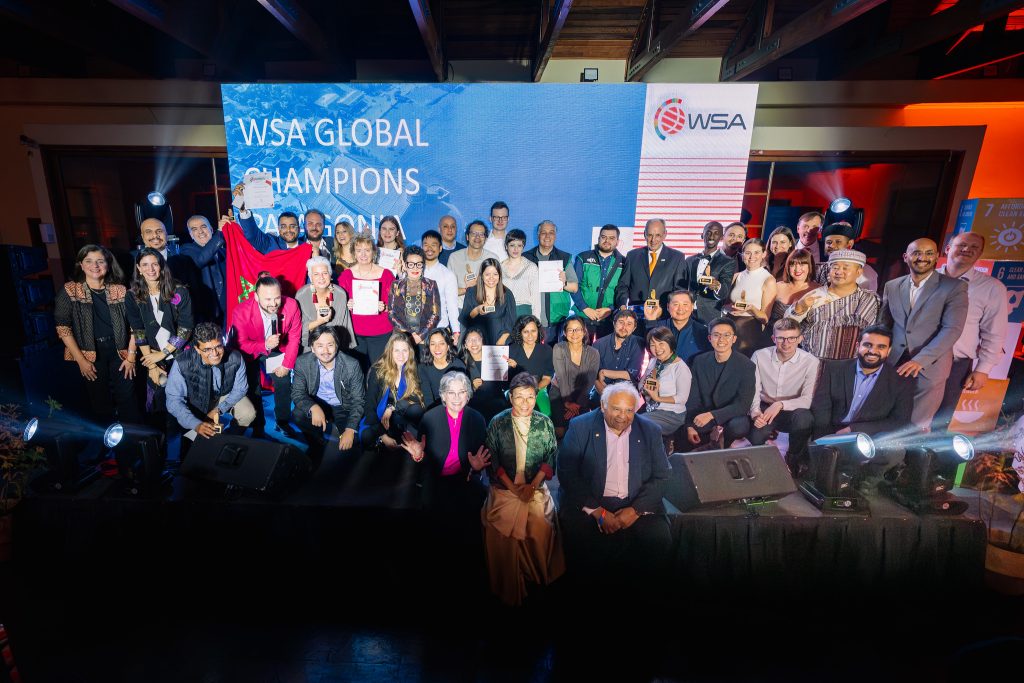
In April, Frederic Bartumeus and Alex Richter-Boix, members of the CSIC and Mosquito Alert team had the opportunity to participate in the WSA Global Congress held in the region of Los Lagos, Southern Chile, as winners of the WSG 2023.
At the congress, the team presented the Mosquito Alert tool developed by CSIC and UPF, an integral part of the E4Warning project aimed at enhancing the capabilities of monitoring and managing vectors and mosquito-borne diseases. Over recent years, the tool has proven its effectiveness and impact by detecting the early presence of invasive mosquitoes –like the tiger mosquito Aedes albopictus– that can act as vectors, as well as capturing and modelling the dynamics of their populations, contributing to improving the management of mosquitoes in cities like Barcelona, Spain, in collaboration with the Public Health Agency of Barcelona (ASPB) which are also partners of E4Warning.
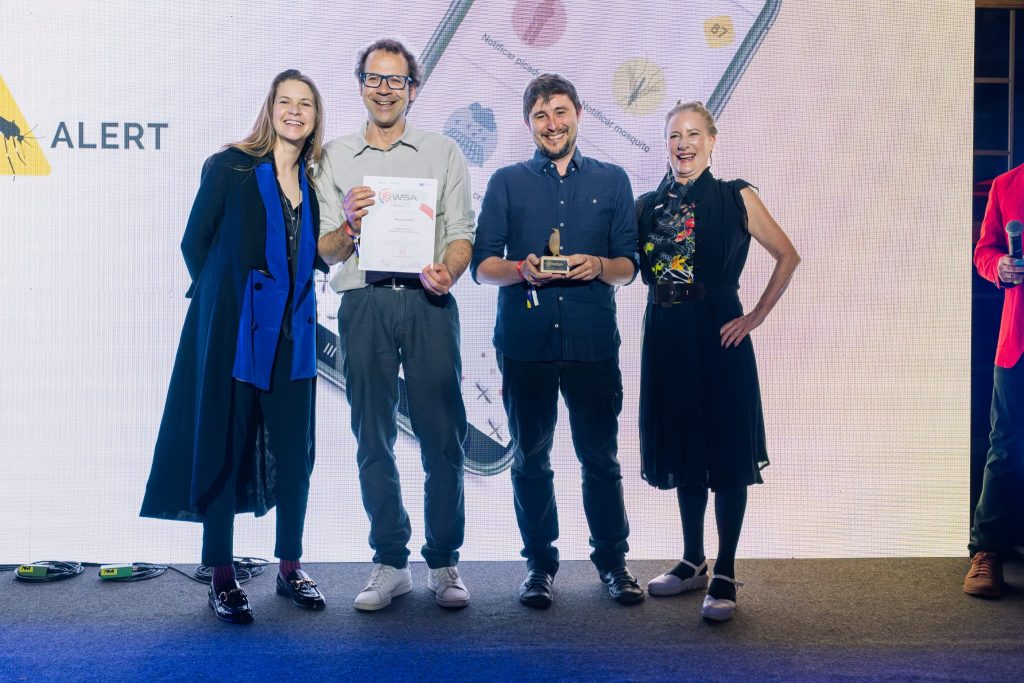
The theme of this year’s WSA Congress, “planet_hack_,” was aptly chosen to highlight the urgent need to address climate change and the expanding opportunities for technological and environmental innovations that accompany this challenge. Participation in the event allowed to not only share the achievements and the impacts of the Mosquito Alert tool but also to engage with other innovators, fostering a network of contacts.
The congress was a celebration of impact entrepreneurship, aligning perfectly with the UN’s global goals and providing a platform for like-minded pioneers to connect and exchange ideas. The team returned energized, ready to build on the substantial progress already made in public health surveillance and excited about the promising new collaborations that arose from this inspiring event.
We are thrilled to announce that the E4Warning project will be participating in an upcoming webinar on May 21st, 2024, at 11 AM CET entitled: Citizen Science in Environmental Observations and Health Research. This webinar will explore innovative engagement strategies within Citizen Science initiatives and the impactful use of Mobile Applications, in collaboration with the OneAquaHealth project and Wise Angle Consulting S.L.
During this session, we will exchange experiences and insights on successful citizen engagement techniques. The first segment of the webinar will highlight citizen science approaches, featuring presentations from OneAquaHealth, DRYvER, and our very own E4WARNING project. We will delve into our collective experiences involving citizens, and the results obtained in Europe.
In the latter half of the webinar, we will concentrate on mobile apps as digitial solution, where the creators of Pharaon and Invasoras.pt Apps will offer a deep dive into the common challenges encountered while promoting these apps and designing them with a user-centric approach.
We are excited to share our journey and learn from our peers in this collaborative setting. Join us as we discuss, learn, and pave the way forward in the integration of community-driven science and technology for the betterment of environmental and health research.
Eva Veronesi (SUPSI) attended the 6th International Workshop on Aedes albopictus in Phnom Penh, Cambodia, from March 28-29, 2024. Organized by the Institute Pasteur of Cambodia, the workshop was led by Dr. Sébastien Boyer (head of the Medical and Veterinary Entomology Unit at the Institute). The opening session was presided over by Prof. André Spiegel, Director of the Institute Pasteur of Cambodia, with the presence of Professor Chheang Ra, Minister of Health of Cambodia, Mr. Jacques Pellet, Ambassador of France to Cambodia, and Dr. Boyer, who delivered the introductory talk.
The Aedes albopictus, commonly known as the tiger mosquito, is a principal carrier of Dengue fever, Chikungunya, Zika, and at least 20 other significant pathogens impacting public health. Originating from the tropical and subtropical zones of Southeast Asia, the tiger mosquito has expanded its reach globally over the last century, facilitated by international trade and travel. Distinguished by distinctive white stripes on its legs and body, the species has adapted well to human environments. As a considerable nuisance, the tiger mosquito typically resides close to human habitats and is known for its daytime biting behavior, especially during early morning and late afternoon periods.
The event was focused on enhancing scientific collaboration and showing innovative vector control strategies. Key research topics covered included vector models of invasion and dispersal, and the role of the species as a bridge vector, including the influence of climate change on vector behavior. For that, the workshop unfolded five sessions:
Aedes albopictus in Asia.
Biology and Ecology of Aedes albopictus.
Vector control: challenges and innovations.
Vector control: insecticide resistance.
New surveillance strategies.
It was during the session on innovative surveillance strategies that E4Warning was spotlighted. The presentation titled “The Role of E4Warning in Combating the Spread of Dengue in Asia and its Potential Incursion into Europe” by Eva Veronesi showcased to the audience the surveillance tools involved in the project, such as Mosquito Alert (CSIC, UPF), VECMAP (AVIA-GIS) and the smart traps designed by IRIDEON. Additionally, it highlighted the dengue models developed by the Barcelona Supercomputing Center (BSC) and HR Wallingford.
E4Warning participated in the high-level conference “Research Perspectives on the Health Impacts of Climate Change,” organized by the Directorate-General for Research and Innovation (DG RTD) of the European Commission. This event, held in Brussels on February 19th and 20th, 2024, aimed to highlight the crucial nexus between climate change and global health issues.
Chloe Fletcher, a PhD candidate from the Global Health Resilience group at the Barcelona Supercomputing Center (BSC), attended the conference. Her research focuses on developing statistical models for predicting outbreaks of climate-sensitive infectious diseases, such as dengue and leptospirosis. Fletcher presented a poster titled “A Generalized Modelling Framework for Dengue Early Warning Systems in South and Southeast Asia,” a collaborative effort involving Ramy Hoek Spaans (BSC), Sophie Belman (BSC), Chloe Fletcher (BSC), Quillon Harpham (HRW), Gina Tsarouchi (HRW), and Rachel Lowe (BSC), all contributing to the E4Warning project.
This study aims to broaden the successful application of the Dengue Forecasting Model Satellite-based System (D-MOSS), originally implemented in Vietnam, to include Sri Lanka and Malaysia. By employing a Bayesian modeling approach and contrasting it with the conventional practices of dengue outbreak monitoring in each nation, the research seeks to identify which dengue predictors remain consistent or vary across these diverse regions.
The goal is to establish a universally applicable template for developing dengue early warning systems. The D-MOSS platform, which underpins this forecasting system, is managed by HR Wallingford. A key ambition of E4Warning is to collaborate intimately with local partners to deliver actionable data visualizations, thereby enabling an informed, data-driven approach to dengue management.
You can view the summaries of other posters presented during the conference at this link.
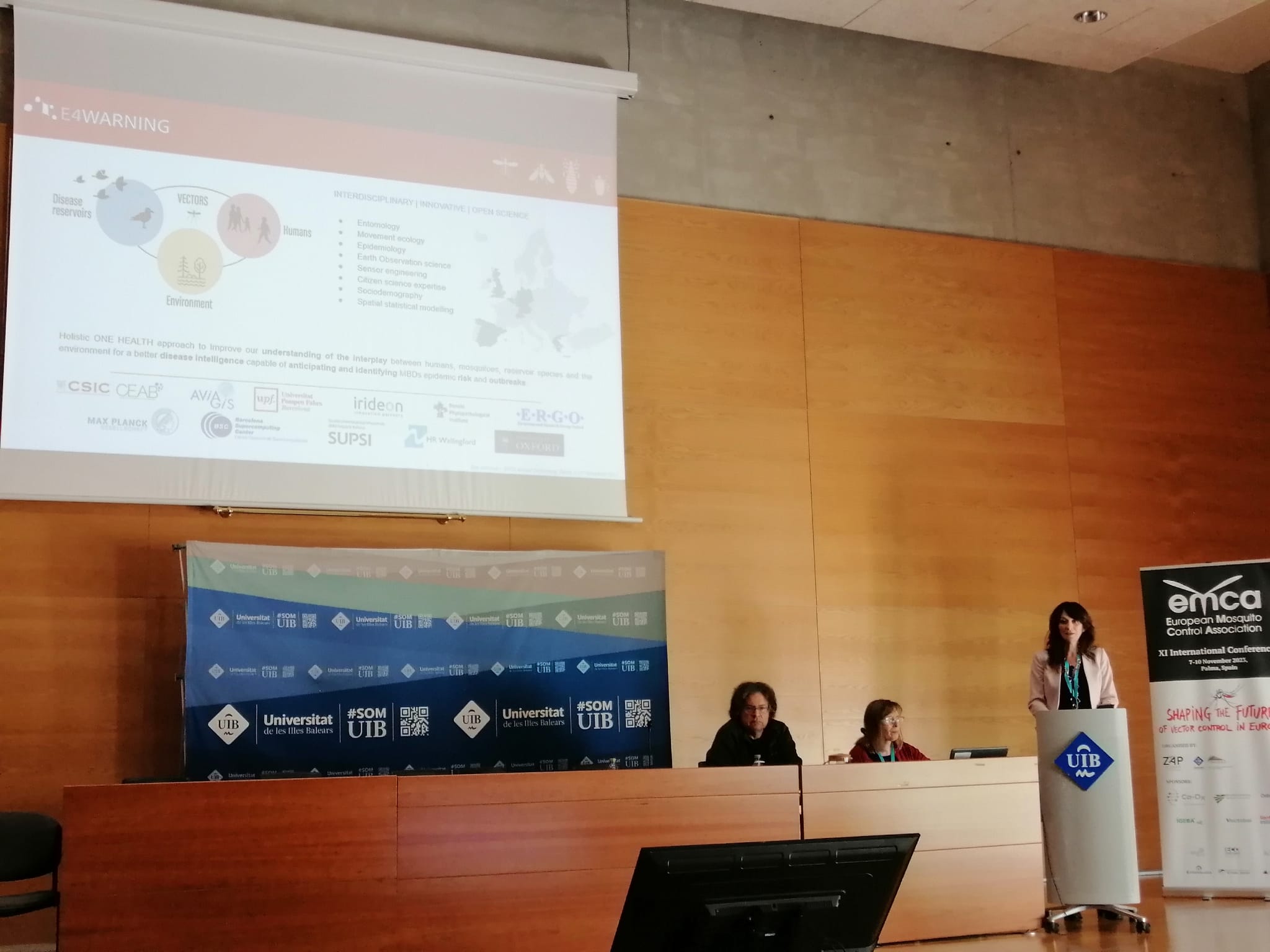
The XI International Conference of the EMCA, held from November 7th to 10th, 2023, in Palma de Mallorca, served as a gathering for vector control specialists to share research and insights. With the theme “Shaping the Future of Vector Control in Europe,” the conference was organized by Dr. Francis Schaffner, president of EMCA, along with Dr. Carlos Barceló and Prof. Miguel A. Miranda from the Universitat de les Illes Balears (UIB). Among the highlights was E4Warning’s presentation on their Mark-Release-Recapture (MRR) experiments with Culex pipiens mosquitoes.
Eva Veronesi from SUPSI discussed the developed protocol for breeding, marking, and recapturing these mosquitoes and shared preliminary results from two pilot studies conducted in Switzerland last September. These studies are vital for understanding mosquito behavior and movement, key factors in vector-borne disease control.
The MRR technique, a fundamental method in ecological studies, involves capturing, marking, and releasing individuals back into their environment, then recapturing them after a period. This technique provides insights into movement patterns, survival rates, and population sizes, crucial for ecological and epidemiological studies.
In the summer of 2024, these methodologies will be applied in Switzerland and Spain to study the dispersal capacity of Culex mosquitoes, especially Culex pipiens and Culex molestus, which are known for transmitting the West Nile Virus (WNV).
These experiments are part of Work Package 5 (WP5) in the E4Warning project, which focuses on quantifying and understanding the movements of both vectors (mosquitoes) and hosts (birds) in WNV transmission. The data obtained will be instrumental in developing strategies to control WNV in Europe.
Additionally, the conference served as a valuable meeting point for various partners involved in the E4Warning project. This opportunity for face-to-face interaction and collaboration among researchers and specialists was crucial for fostering synergy and advancing the project’s objectives. Such gatherings reinforce the importance of collaborative efforts in addressing public health challenges like vector-borne diseases.
The 2nd International One-Health Conference, held in Barcelona on October 19-20, 2023, saw a distinguished assembly of professionals from diverse fields come together to advance the multidisciplinary conversation on public health. Among the attendees was Frederic Bartumeus from the Spanish National Research Council (CSIC), who presented the groundbreaking work of E4Warning.
With health being an essential aspect of modern society, the conference set forth the goal of bridging the gap between scientific knowledge and policy-making through a One Health approach—a holistic and integrated perspective on health that considers human, animal, and environmental well-being. The event aimed to foster synergistic dialogues among research fields and action domains, engaging researchers, experts, students, and decision-makers.
Central to the congress were the framing questions that challenge current paradigms and seek to integrate the One-Health framework into the health sector comprehensively. Discussions revolved around the inclusion of the One-Health framework in legislation under the EU, understanding the interlinkages between health, climate change, and decision-making, and identifying the concerns health professionals have regarding the One Health concept. The conference sought not only to outline the open questions but also to explore opportunities and solutions to overcome barriers to implementing the One-Health approach.
In this context, Frederic Bartumeus presented E4Warning’s contribution to enhancing urban resilience capacities through the One Health approach. He outlined the innovative tools developed as part of E4Warning and the various methodologies employed to address the risks of mosquito-borne diseases within the framework of eco-epidemiological intelligence. His presentation shed light on the project’s interdisciplinary strategies for early warning and response, which are crucial in the context of a changing climate and emerging health threats.
Bartumeus’s participation underscored the pivotal role of E4Warning in providing actionable solutions and insights, reinforcing the importance of integrating scientific research with policy and decision-making. The conference also had the participation of Maria Feio from the University of Coimbra, who’s contribution to the conference centered around the innovative OneAquaHealth project, which underscores the potential of earth observations to monitor changes in urban aquatic ecosystems that are pertinent to human health.
The 2nd International One-Health Conference was more than a meeting of minds; it was a step forward in operationalizing the One Health concept in a way that meets the pressing health challenges of our times.